Thimbellumare II
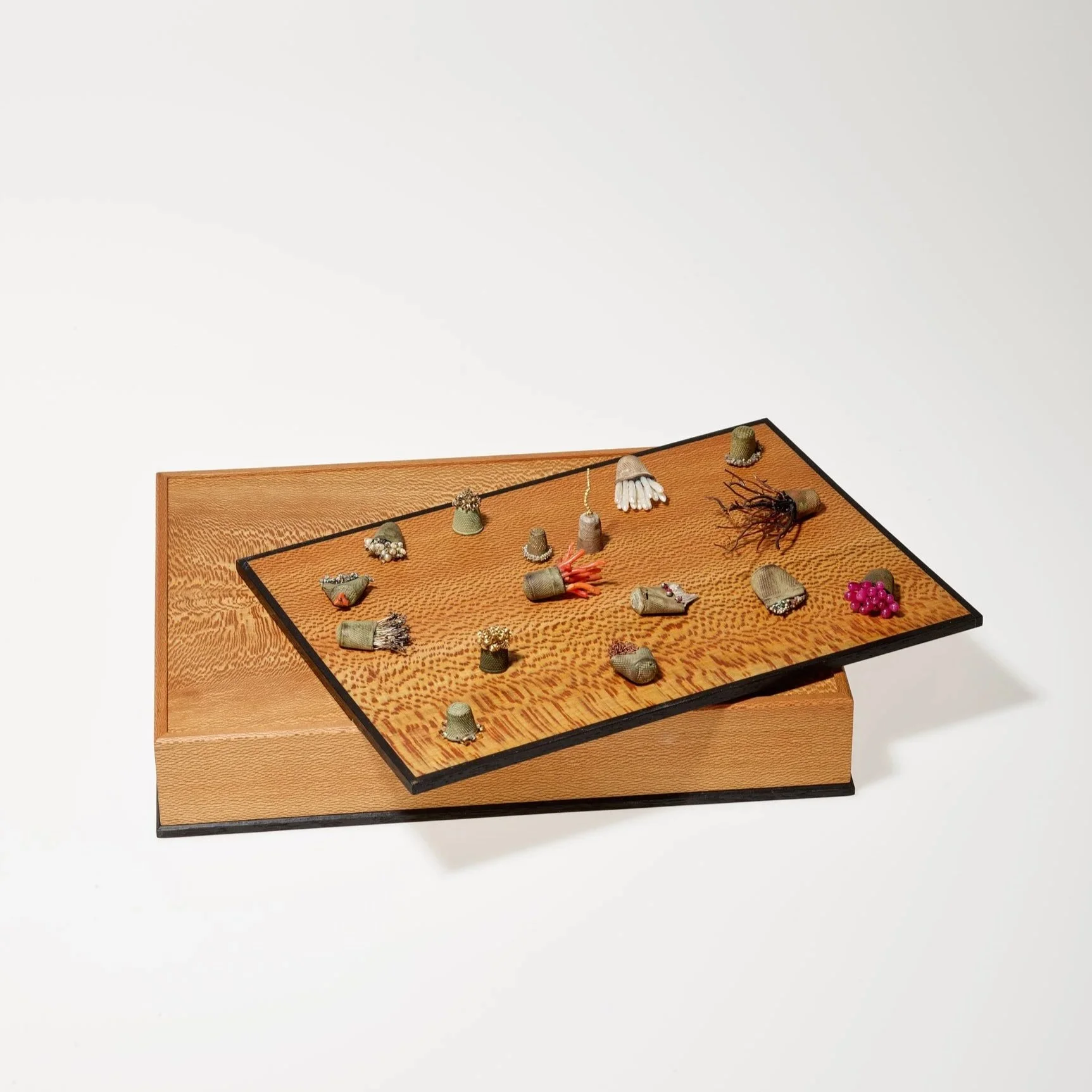
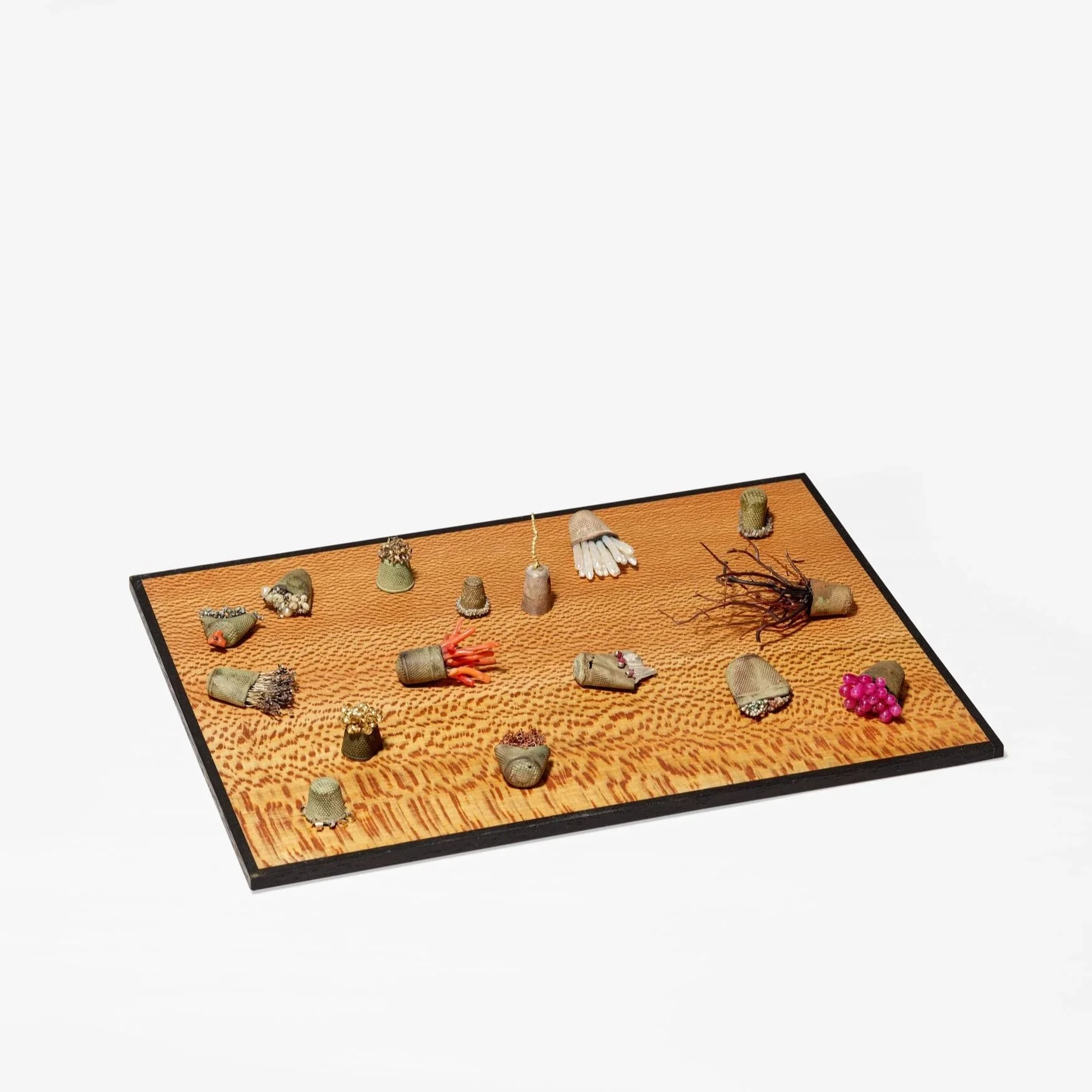
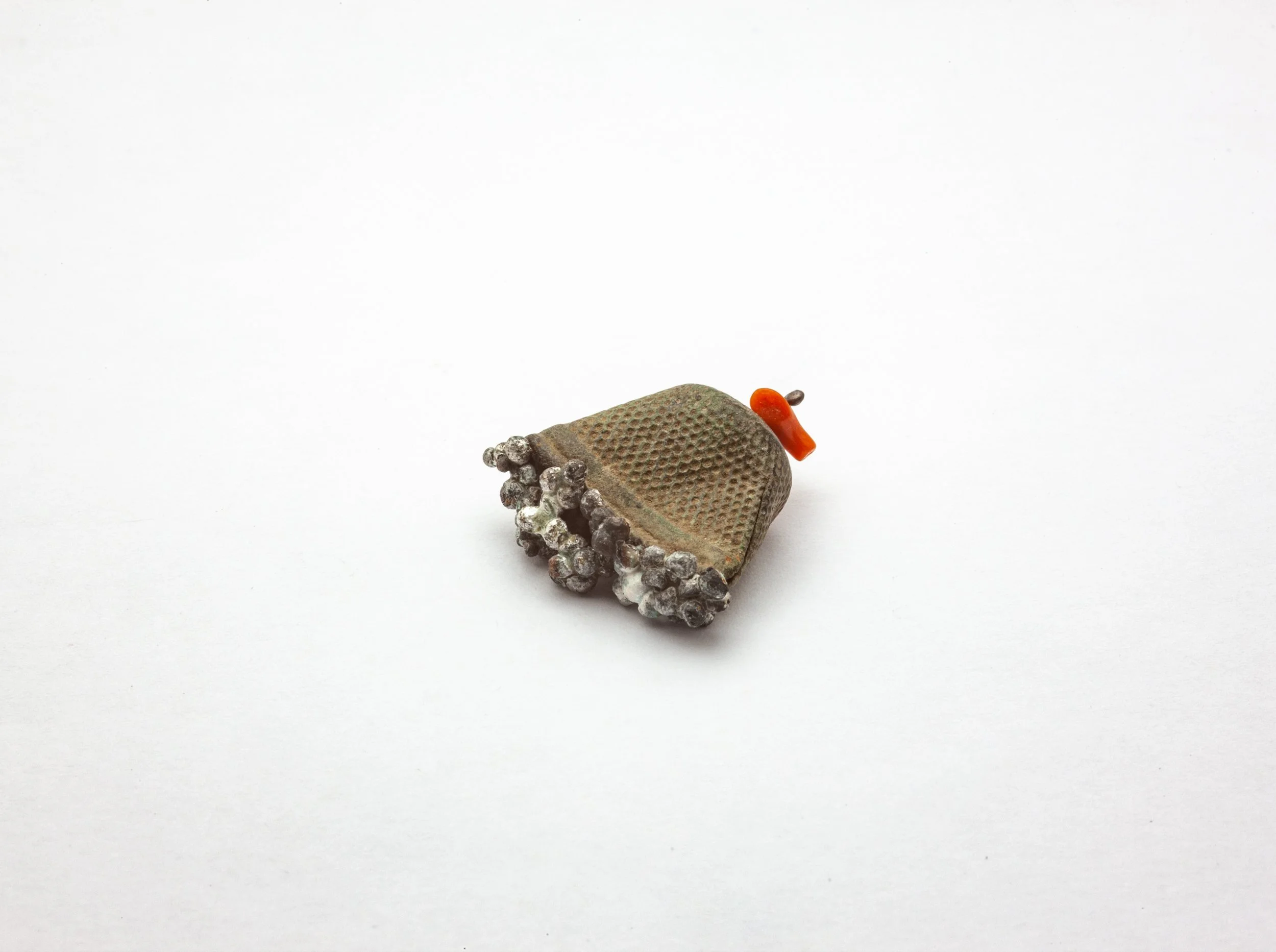
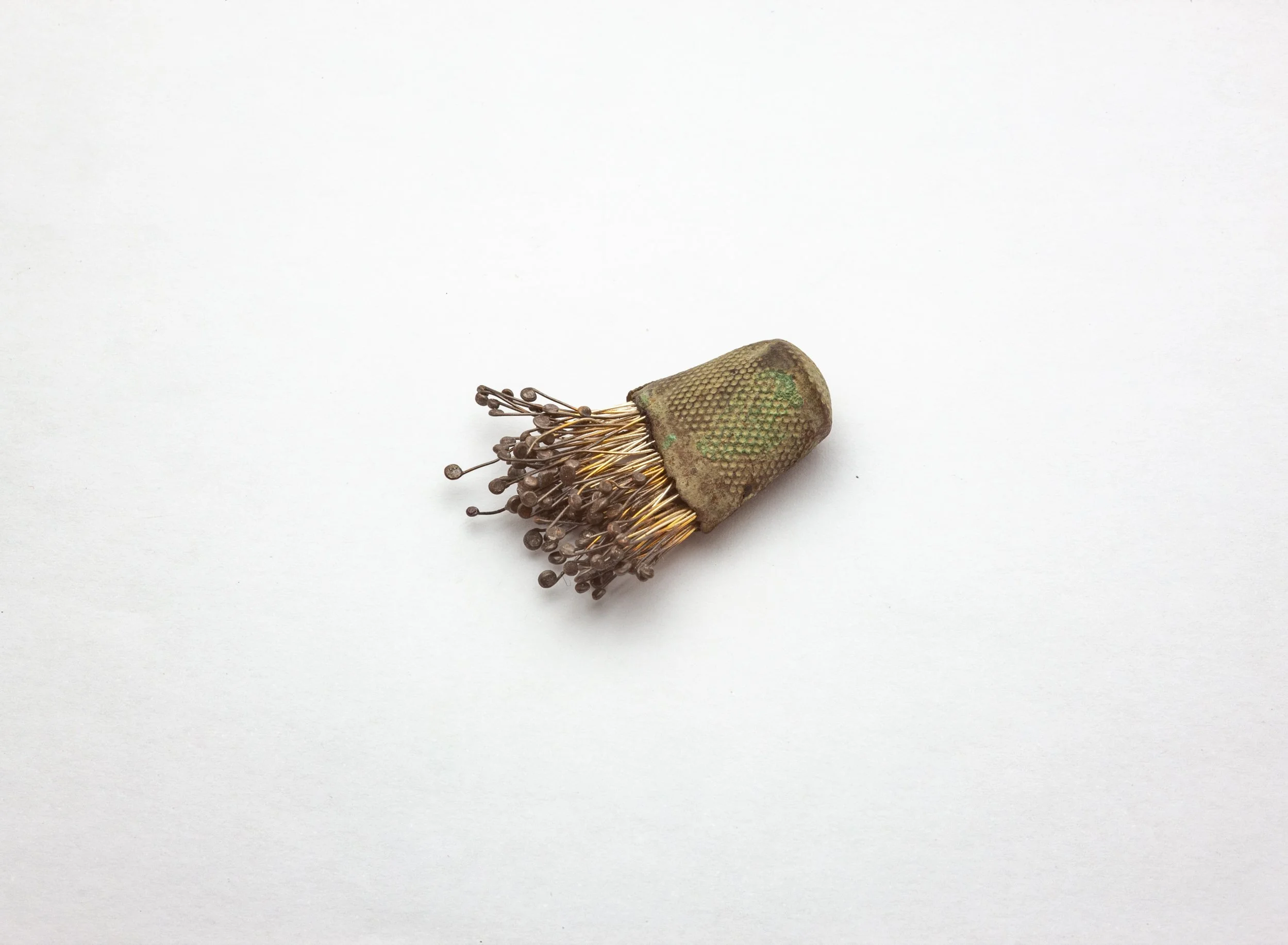
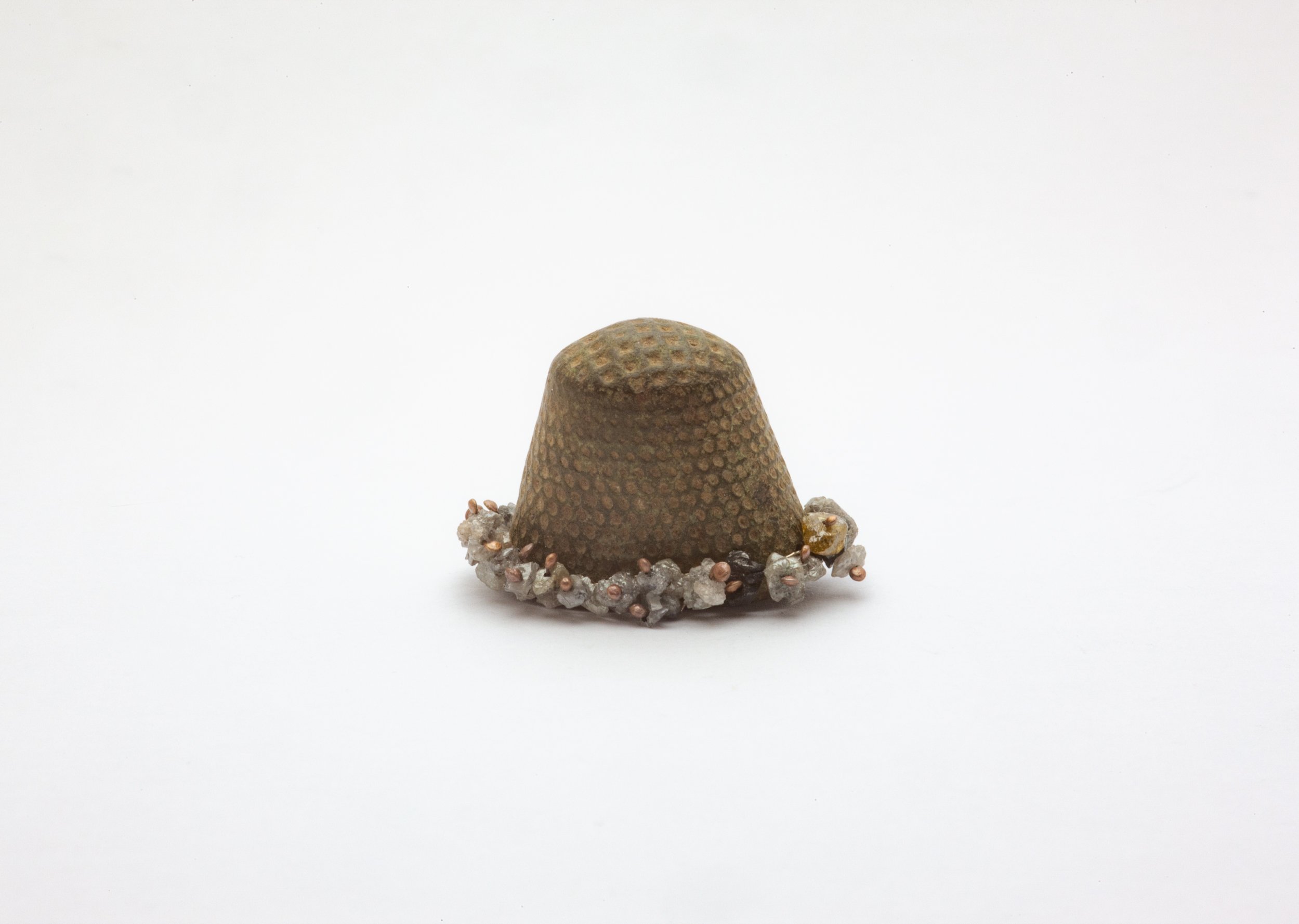
Thimbellumare II
Thimbellumare I was originally made for an exhibition at Make Hauser & Wirth and were shown on trays made from London plane tree wood which sometimes has a wonderful grain that looks like sand at the bottom of the sea. Thimbellumare II was shown at Uncommon Beauty – objects of curiosity and wonder at the Makers Guild Wales gallery (Cardiff, 2023), and Invisible Landscapes (London, 2025).
You can reach more about the Thimbellumare here.
5.5 x 24 x 33 cm
Comes with a tray and a box made of lace wood.
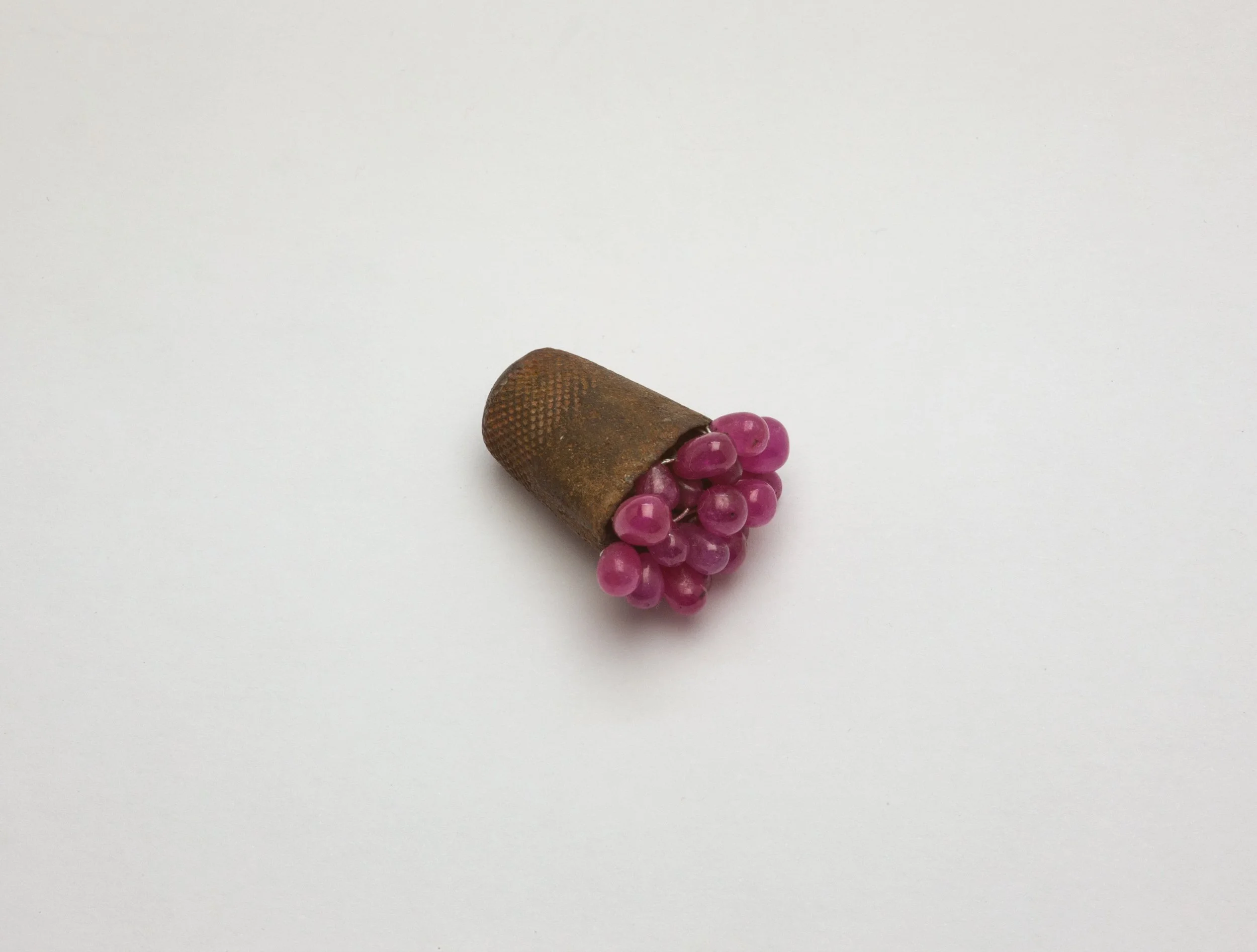
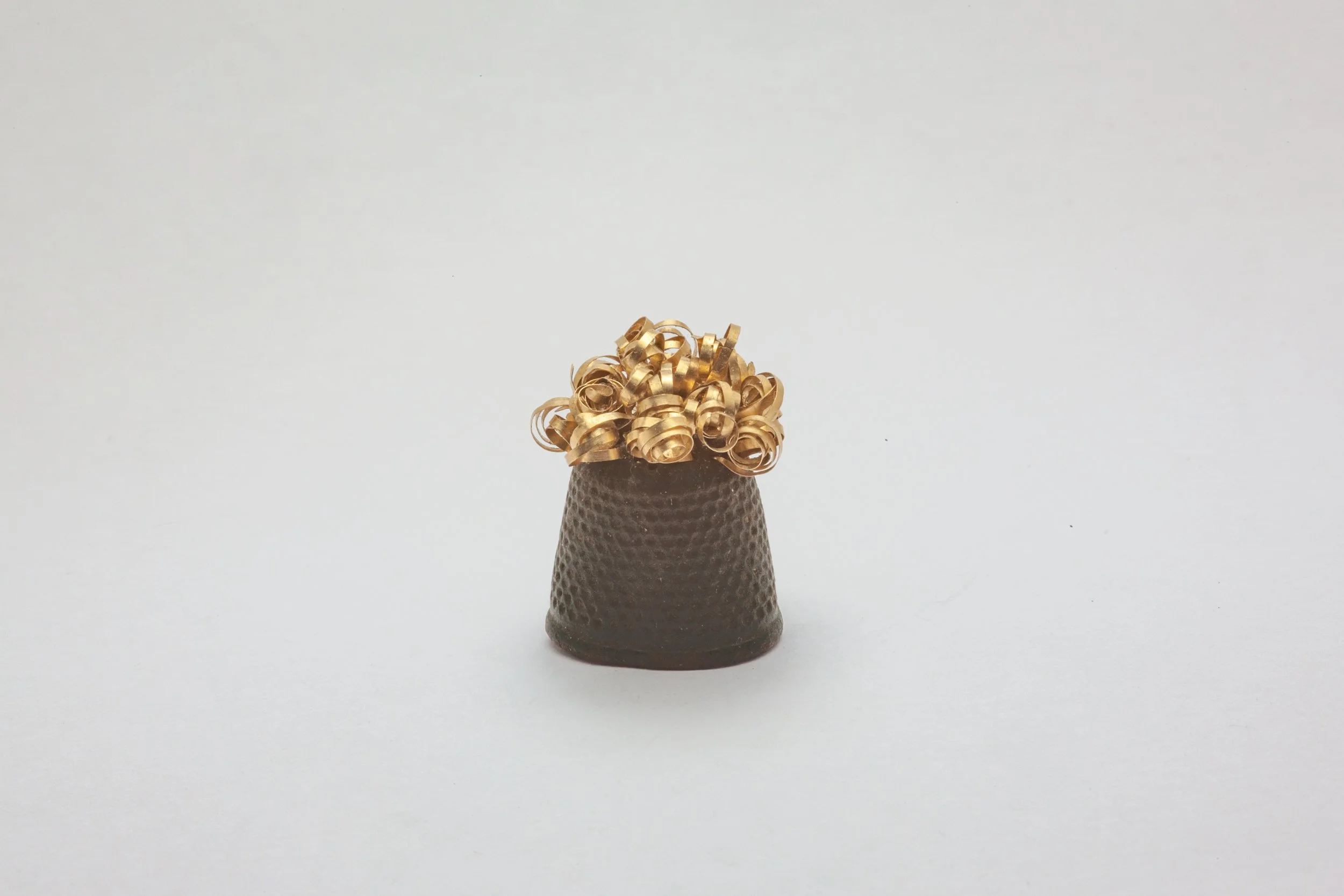
Lacewood; bronze; silver; 18k gold; coral; seed pearls; diamond beads; rubies; copper.
First two images by Ornan Rotem.
Alongside buckles and buttons, thimbles are found in great numbers by detectorists. They range in size from huge to so tiny that it looks like a baby might have worn it. They are usually squashed and misshapen, made from bronze and occasionally silver (and I expect gold – but not on eBay). Each one seems to have its own character and as I began to add various elements to them they became even more animated. They were a collection of creatures that could be named and classified. One of my carers works at Kew Gardens and we thought to make a fantasy genus named under the Linnean system – the genus name followed by two words to describe the species i.e. Clematis Montana Alba. Remarkably, the Romans did not have thimbles (does this explain why their clothes were so simple – togas and draped dresses?). So I named the genus Thimbellumare – Fighting Sea Thimbles or perhaps Warlike Sea Thimbles – the names for war and sea were almost the only two that I retained after several years of school Latin. Each one was named using a dictionary and then tidied up with help from an Oxford undergraduate doing classics. I wanted to memorialise my translators/makers and you will find their names included, for example: Gravida Walesii, a Medieval beehive thimble with a Tahitian pearl inside to represent the baby she was carrying.